

Introduction
Effective leash training forms a cornerstone of responsible dog ownership, enhancing both a dog’s safety and its relationship with its handler. Among various methodologies, the approach often associated with Cesar Millan, frequently termed “Cesar Millan leash training,” emphasizes a philosophy rooted in calm, assertive leadership and structured walks. This method aims to address common issues such as pulling, lunging, and reactivity, which can make walks stressful for both dog and owner. Understanding this training paradigm can help dog owners cultivate a more balanced, obedient companion, leading to improved well-being and a more harmonious shared life. When a dog walks calmly on a leash, it experiences its environment in a controlled manner, reducing anxiety and fostering a sense of security, which in turn benefits its overall quality of life.
💡 Pet Care Key Takeaways:
- Core Focus: Practical health, nutrition, and wellness guidelines for Cesar Millan Leash Training.
- Target Scope: Pet owners, animal caregivers, and veterinary support staff.
- Best Recommendation: Maintain consistent daily routines and consult an accredited veterinarian before introducing major diet or medical changes.
Common Causes and Key Factors
Issues requiring structured leash training often stem from several fundamental factors. A primary cause is often a lack of perceived leadership from the human handler. Dogs are pack animals, and in the absence of clear, calm guidance, some dogs may attempt to assume a leadership role, manifesting as pulling or dictating the pace and direction of a walk. For more related activities, check out our Cesar Millan How To Stop Puppy Biting.
Environmental over-stimulation also plays a significant role. New sights, sounds, and smells can overwhelm a dog, leading to excitement, fear, or frustration expressed through erratic leash behavior. Insufficient mental and physical exercise prior to a walk can also contribute; pent-up energy frequently translates into an inability to walk calmly.
Furthermore, the use of inappropriate equipment or inconsistent training methods can exacerbate problems. Harnesses designed for pulling, or collars that do not provide clear communication, can hinder progress. Inconsistent expectations from the handler, where pulling is sometimes tolerated and sometimes corrected, can confuse a dog and reinforce undesirable habits.
Signs and Symptoms to Observe
Observing a dog’s behavior on a leash can reveal much about its comfort level and training needs. The most common sign indicating a need for intervention is persistent pulling, where the dog constantly strains against the leash, often choking itself. This can be observed across various breeds and ages, though strong, energetic breeds may exhibit it more forcefully.
Other indicators include lunging or barking at other dogs, people, or moving objects, often referred to as leash reactivity. A dog might ignore the handler’s commands, displaying an inability to focus or respond even to familiar cues. Excessive sniffing, marking, or frantic exploration of the environment can also suggest a lack of focus on the handler.
Subtler signs of discomfort or stress, such as excessive panting, yawning, lip licking, tail tucked low, or a stiff body posture, may also appear during walks. These can indicate fear, anxiety, or over-stimulation, which can precede or accompany more overt behavioral challenges. A dog might also resist walking entirely, planting its feet or attempting to go in a different direction.
Practical Solutions and Management Strategies
Cesar Millan’s leash training philosophy centers on the handler’s ability to project “calm-assertive” energy. This involves maintaining a confident, relaxed demeanor, which communicates leadership to the dog. Before even stepping outside, it can be beneficial to drain some of the dog’s excess energy through structured play or a controlled exercise session indoors. This helps the dog approach the walk in a calmer state.
Choosing the right equipment is crucial. A slip lead, a prong collar (when used correctly and humanely), or a specific training collar can serve as effective communication tools, allowing for clear and immediate feedback. It is imperative that any training tool is fitted properly and used as intended, not as a punitive device. The goal is to correct a behavior in the moment and redirect the dog to a desired state.
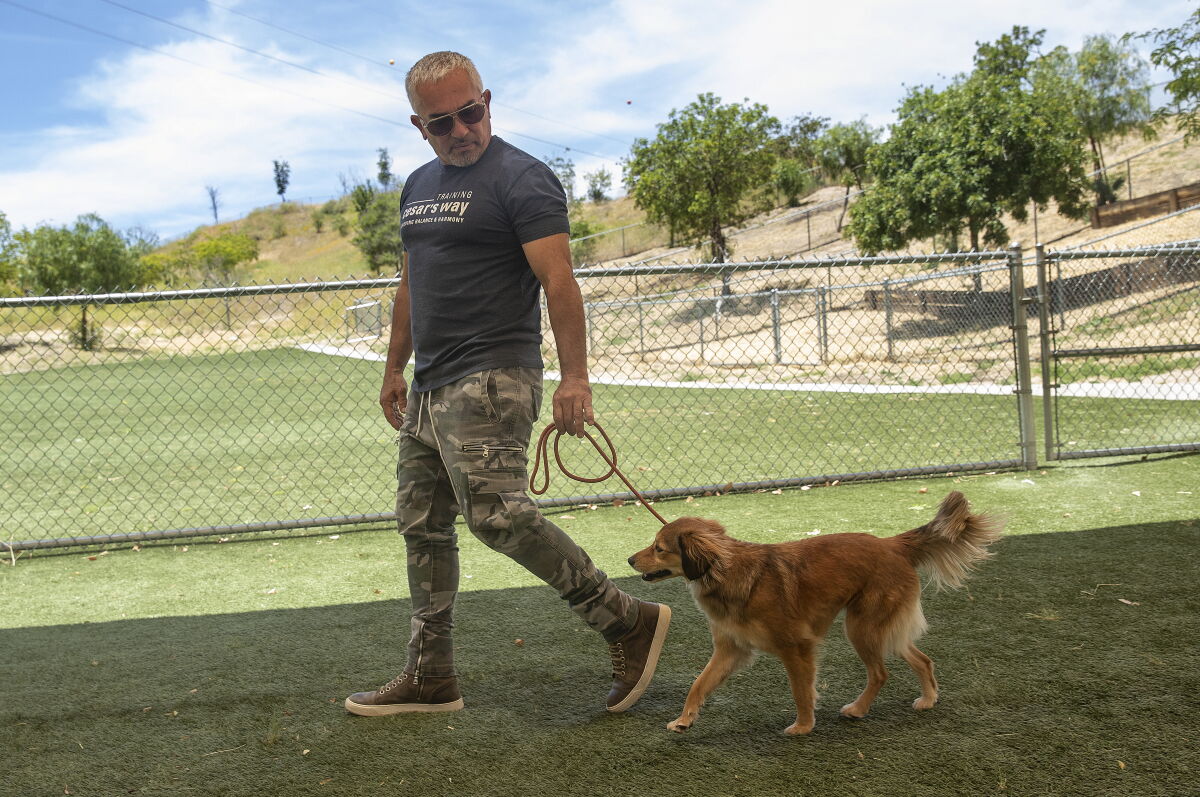
Establishing clear rules and boundaries is fundamental. This includes having the dog wait patiently at doorways and allowing the handler to exit first, reinforcing the handler’s leadership. During the walk, the dog should learn to walk beside or slightly behind the handler, never ahead. If the dog pulls, the handler stops immediately until the leash slackens, then resumes walking. This teaches the dog that pulling does not achieve forward momentum.
Consistent, timely corrections are vital. A quick, firm, yet gentle leash correction can interrupt unwanted behavior like pulling or lunging. The correction should be followed by immediate relaxation on the leash once the dog responds appropriately. Positive reinforcement, in the form of calm praise or a gentle touch, acknowledges desired behavior when the dog walks calmly by the handler’s side. Starting training in low-distraction environments and gradually increasing exposure to more stimulating settings helps solidify these behaviors.
When Professional Help May Be Needed
While many leash manners can be improved through consistent application of training principles, certain situations warrant professional intervention. If a dog exhibits severe leash reactivity that includes aggression towards other animals or people, or if the behavior poses a risk to others, seeking expert guidance is essential.
Extreme fear, anxiety, or panic during walks that do not respond to basic training methods may indicate a deeper behavioral issue requiring a specialist. Dogs that display unpredictable behavior, or those for whom owners have tried various techniques without sustained success, can also benefit from professional input. A certified professional dog trainer or a canine behaviorist experienced in balanced training methodologies can provide tailored strategies and hands-on guidance.
Additionally, a veterinary consultation is always advisable to rule out any underlying medical conditions that might be contributing to behavioral challenges, such as pain, discomfort, or neurological issues. Addressing physical health concerns can often be a crucial first step in resolving training difficulties.
Conclusion
Cesar Millan’s approach to leash training offers valuable insights for dog owners seeking to establish calm and structured walks. Its core tenets of calm-assertive leadership, proper equipment use, and consistent application of rules contribute to a more harmonious relationship between a dog and its handler. Understanding and implementing these principles can transform walks from a source of stress into an enjoyable and enriching experience for both parties. Owners are encouraged to maintain awareness, observe their dog’s responses, and commit to consistent, patient training. Through dedicated effort, dogs can learn to navigate their environment respectfully, leading to a safer, happier, and more balanced life within their human families.
Pet Care & Wellness Overview Table
| Life Stage | Daily Activity Level | Key Nutrition / Care Focus |
|---|---|---|
| Puppy / Kitten | High (frequent short bursts) | High-protein growth diet & early socialization |
| Adult Companion | Moderate (30–60 mins daily) | Balanced maintenance nutrition & dental hygiene |
| Senior Pets | Low to Gentle (mindful walks) | Joint support (Glucosamine) & routine vet checks |
Images References




For more expert pet care tips and advice, check out our dedicated Dog Training guides to keep your companions healthy and happy.




