

Understanding the End of Life Journey in Canines
Navigating the final stages of a canine companion’s life represents one of the most emotionally challenging responsibilities for any household. According to the American Veterinary Medical Association, understanding the physiological and behavioral shifts that occur during the dying process helps guardians provide comfort and maintain dignity for aging animals. Recognizing these signs allows families to consult with veterinary professionals effectively, ensuring appropriate palliative care and timely decisions regarding humane euthanasia when suffering outweighs quality of life.
💡 Pet Care Key Takeaways:
- Core Focus: Practical health, nutrition, and wellness guidelines for Dog Behavior When Dying.
- Target Scope: Pet owners, animal caregivers, and veterinary support staff.
- Best Recommendation: Maintain consistent daily routines and consult an accredited veterinarian before introducing major diet or medical changes.
Dog behavior when dying encompasses a wide spectrum of physical and psychological adjustments as the body’s organ systems gradually slow down. Observing these transitions requires patience, close observation, and a gentle approach to daily routines. While every individual animal responds differently based on underlying health conditions, species longevity, and personal temperament, common patterns emerge as the natural life cycle nears its completion.
Interpreting Shifts in Canine Conduct and Responsiveness
Dog behavior when dying primarily involves profound lethargy, withdrawal from social interaction, and a noticeable decline in responsiveness to familiar stimuli. Canines experiencing the final stages of life often seek out quiet, secluded areas such as closets, corners behind furniture, or beneath beds. This instinctual retreat reflects a natural conservation of energy and a biological response to vulnerability. Additionally, dogs may display decreased interest in favorite toys, walks, or greeting family members at the door, signaling a deep internal focus on resting.
Another frequent observation involves altered sleep-wake cycles, where animals sleep nearly continuously or remain restless through the night. Sensory faculties like sight and hearing may also diminish, causing confusion or mild distress if a dog awakens suddenly in an unfamiliar posture. Providing a familiar, soft resting place with minimal environmental noise helps mitigate anxiety during these moments of disorientation.
Profuse lethargy and social withdrawal are among the most frequently observed behavioral indicators of the natural dying process in geriatric dogs — American Veterinary Medical Association
Managing Comfort and Environmental Needs During Decline
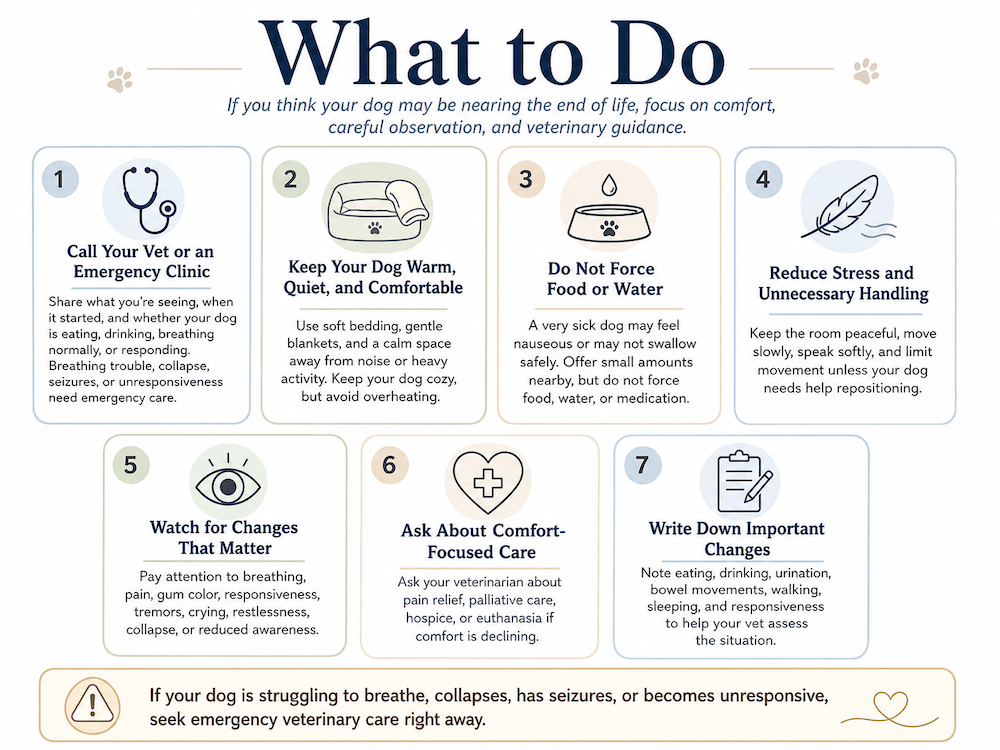
Proper care management focuses on minimizing physical discomfort and optimizing the immediate living environment for a declining pet. As mobility decreases, dogs often struggle with slick flooring, making non-slip rugs and orthopedic bedding essential additions to the home. Maintaining optimal room temperature prevents chills, as failing circulatory systems often struggle with thermoregulation. Consistent gentle reassurance, soft vocal tones, and minimal handling help maintain a sense of security without overwhelming fragile joints or sensory systems.
Nutritional and hydration needs also shift dramatically during this period. Appetite decline and reluctance to consume water are typical physiological markers of organ system deceleration. For guidance on appropriate dietary adjustments and safe hydration techniques, consulting resources on Dog Nutrition provides valuable insight into supporting palliative care without causing digestive distress.
Best Practices and Common Mistakes to Avoid
Creating a peaceful environment requires adherence to supportive practices while avoiding well-intentioned errors that might inadvertently increase stress. For instance, forcing food or water can lead to choking or aspiration pneumonia, particularly when swallowing reflexes weaken. Instead, moistening the gums with a damp cloth or offering small amounts of veterinary-approved broth under professional guidance is generally safer. Furthermore, isolating a dog entirely from the household can heighten anxiety; striking a balance between quiet isolation and gentle, low-stress companionship remains vital.
Guardians should also monitor for signs of acute pain, such as panting without exertion, restlessness, whimpering, or unusual resistance to being touched. Maintaining a detailed log of daily comfort levels, bathroom habits, and behavioral changes facilitates more productive discussions during veterinary evaluations. Understanding broader aspects of Dog Health helps distinguish normal age-related slowing from acute medical emergencies that require immediate professional intervention.
Changes in respiration, such as shallow breathing or irregular pauses, frequently accompany the active transitional phase of life — American Animal Hospital Association
Pet Care & Wellness Overview Table
| Life Stage | Daily Activity Level | Key Nutrition / Care Focus |
|---|---|---|
| Puppy / Kitten | High (frequent short bursts) | High-protein growth diet & early socialization |
| Adult Companion | Moderate (30–60 mins daily) | Balanced maintenance nutrition & dental hygiene |
| Senior Pets | Low to Gentle (mindful walks) | Joint support (Glucosamine) & routine vet checks |
Images References





Influences of Breed, Age, and Size on End-of-Life Patterns
Physical traits and genetic background significantly shape how canine companions experience and manifest the final chapter of life. Giant breeds often reach geriatric status earlier in life, sometimes showing mobility decline and cognitive changes at a chronological age when smaller breeds remain active. Conversely, toy and small breeds frequently live longer lives, yet may exhibit distinct patterns of sensory loss or dental-related complications that influence daily comfort and behavior.
Individual temperament also dictates behavioral expressions; naturally independent dogs may retreat further into solitude, while highly bonded, people-oriented dogs may cling closely to specific family members. Recognizing these baseline personality traits ensures that guardians interpret behavioral shifts accurately rather than reacting with panic or confusion. Exploring details regarding various Dog Breeds offers broader context on expected lifespans and common health trajectories associated with specific physical conformations.
When to Consult a Veterinary Professional Immediately
Professional veterinary guidance remains indispensable for assessing pain levels, managing chronic conditions, and determining appropriate palliative interventions or humane euthanasia options. Guardians must seek immediate veterinary consultation if a dog exhibits severe distress, unmanaged pain, sudden collapse, difficulty breathing, continuous crying, or uncontrolled seizures. Attempting to manage acute medical emergencies or severe pain at home without professional oversight poses serious risks to animal welfare.
Veterinarians can provide objective assessments of quality of life using standardized evaluation scales, helping families make informed, compassionate decisions. Reviewing comprehensive resources on Dog Care and Dog Behavior equips owners with foundational knowledge to support aging companions through every stage of their life journey.
Conclusion and Supportive Resources
Supporting a canine companion through the final stages of life demands profound empathy, acute observation, and close partnership with veterinary professionals. By recognizing normal behavioral shifts and prioritizing comfort, families honor the deep bond shared with their pets. For additional guidance on canine wellness, training, and holistic well-being, explore the comprehensive articles available on PetsAnimalsWorld.com.




