

According to the American Society for the Prevention of Cruelty to Animals, normal developmental biting in puppies is driven by exploration, teething pain, and the natural urge to mouth littermates during play. When tiny needle-sharp teeth latch onto human skin, the search for an immediate remedy often begins. Many households stumble upon old-school advice suggesting that a spray bottle filled with water serves as a handy deterrent for unwanted mouthing. Puppies frequently explore the world using their mouths, testing boundaries much like toddlers do during early development. Witnessing a sudden splash can startle a young canine into letting go of a hand or a favorite pair of shoes. Yet, relying on aversion-based discipline introduces unexpected complications into the delicate process of early canine education. Sorting through various management strategies requires looking past the immediate startle reflex and examining how young animals truly learn to inhibit their bite force.
💡 Pet Care Key Takeaways:
- Core Focus: Practical health, nutrition, and wellness guidelines for Spray Puppy With Water To Stop Biting.
- Target Scope: Pet owners, animal caregivers, and veterinary support staff.
- Best Recommendation: Maintain consistent daily routines and consult an accredited veterinarian before introducing major diet or medical changes.
Understanding the Mechanics of Using a Water Spray Bottle
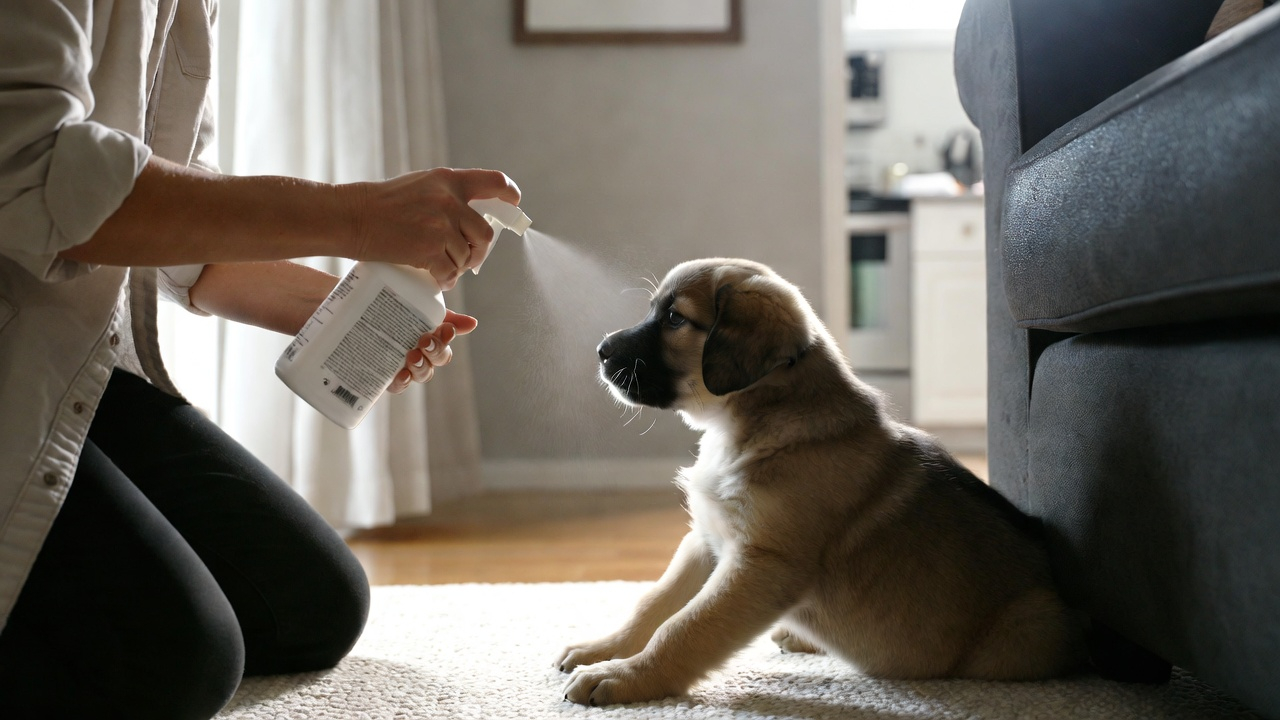
Water sprayers deployed during biting incidents rely on sudden startle effects and mild aversion to interrupt undesirable actions. Positive punishment, a behavioral training term meaning the addition of an unpleasant stimulus to decrease the likelihood of a behavior repeating, forms the foundation of this method. When a puppy latches onto a wrist and receives a sudden mist to the face, the interruption causes the animal to drop back in surprise. Canine behavioral science indicates that while startling interrupts the current action, it rarely teaches the underlying lesson of what the puppy should do instead. Furthermore, many young dogs quickly learn to associate the spray bottle, or even the hand holding it, with unpredictability rather than understanding the human rule about teeth meeting skin. Consequently, the reliance on a spray bottle can inadvertently shift a puppy’s perception of the human guardian from a safe, trusted leader to an unpredictable environmental hazard.
The Behavioral and Emotional Impact of Aversive Corrections
Introducing startle-based tactics into a household often creates unintended anxiety, eroding the foundational trust necessary for lifelong obedience. In professional behavior practice, observing a sensitive puppy shrink away from a misting bottle reveals how quickly fear overshadows learning. Instead of realizing that biting hurts the human, the animal may simply learn to bite in secret or become defensive when hands approach the face. Fear-induced responses can escalate minor puppy mouthing into genuine defensive aggression as the animal matures. Furthermore, withholding proper socialization and positive redirection deprives the dog of essential emotional regulation skills.
Punishment-based training methods frequently elevate baseline cortisol and stress levels in dogs, increasing the risk of generalized anxiety and reactive behaviors over time. — American Veterinary Society of Animal Behavior
Understanding the emotional cost of fear-based corrections encourages a shift toward teaching rather than policing. Dogs thrive when they understand clear boundaries that are communicated through consistency and rewarding alternatives. When households abandon punitive measures, communication channels remain open, allowing the puppy to approach learning with confidence rather than caution.
Effective Alternatives for Managing Puppy Mouthing and Biting
Replacing outdated punishments with proactive management transforms a challenging developmental phase into a valuable bonding opportunity. Redirection stands as the cornerstone of effective Dog Training, where the moment teeth touch skin, a durable chew toy is offered instead. If the puppy persists, a calm, immediate removal of attention by turning away silently teaches that biting makes fun things disappear. Consistency across all family members ensures the puppy receives a unified message regarding acceptable social interaction. Pairing these management techniques with proper mental stimulation prevents the boredom that often triggers frantic chewing sessions.
Best Practices and Common Mistakes to Avoid During Teething
Avoiding high-pitched squealing and frantic hand-pulling prevents accidental simulation of prey movement, which only excites the puppy further. Moving hands rapidly mimics the erratic motions of small prey animals, inadvertently encouraging the puppy to chase and grab harder. Another frequent misstep involves using bare hands to wrestle or play rough, which blurs the lines between acceptable play objects and human flesh. Maintaining a calm, neutral demeanor during biting episodes helps keep the puppy’s arousal levels manageable.
Providing appropriate, texture-varied chew items during the peak teething window between twelve to twenty-four weeks significantly reduces destructive mouthing on household objects. — American Kennel Club
Pet Care & Wellness Overview Table
| Life Stage | Daily Activity Level | Key Nutrition / Care Focus |
|---|---|---|
| Puppy / Kitten | High (frequent short bursts) | High-protein growth diet & early socialization |
| Adult Companion | Moderate (30–60 mins daily) | Balanced maintenance nutrition & dental hygiene |
| Senior Pets | Low to Gentle (mindful walks) | Joint support (Glucosamine) & routine vet checks |
Images References





Establishing predictable routines for rest, play, and feeding further stabilizes a young canine’s daily energy levels. Overtired puppies often turn into relentless landsharks, making enforced quiet time in a crate or pen an essential tool for emotional regulation.
Breed and Temperament Considerations in Bite Inhibition
Individual puppy personalities and breed-specific traits heavily influence how quickly a youngster learns proper bite inhibition. Working and herding breeds, often explored within resources on Dog Breeds, possess intense genetic drives to grip, chase, and mouth moving targets. These high-drive puppies require significantly more structured outlets for their energy than more easygoing companion breeds. Conversely, sensitive guardian breeds may react poorly to even mild startle tactics, developing defensive tendencies much faster than resilient counterparts. Tailoring the approach to match the specific psychological makeup of the individual puppy yields far superior results than applying a rigid, one-size-fits-all discipline style.
Knowing When to Consult a Professional Dog Behaviorist
Persistent biting that does not improve with consistent positive redirection, or mouthing accompanied by stiffening, growling, and snapping, requires professional guidance. Consulting a certified applied animal behaviorist or a veterinary professional ensures that underlying medical issues, such as painful adult teeth eruption or neurological sensitivities, are properly evaluated. Comprehensive guidance on overall wellness found through Dog Health resources reminds owners that sudden behavioral shifts often stem from physical discomfort. Early intervention by a qualified professional prevents minor behavioral hiccups from developing into lifelong aggression issues.
Building Lasting Harmony Through Positive Guidance
Guiding a young canine through the sharp-toothed puppy phase demands patience, understanding, and unwavering consistency from every household member. Abandoning quick-fix methods like water bottles opens the door to building a relationship rooted in mutual trust and clear communication. Exploring general insights on Dog Care helps owners establish environments where puppies feel safe to learn and grow. Visit PetsAnimalsWorld.com to discover more expert resources dedicated to nurturing happy, well-adjusted companions throughout every stage of life.




